
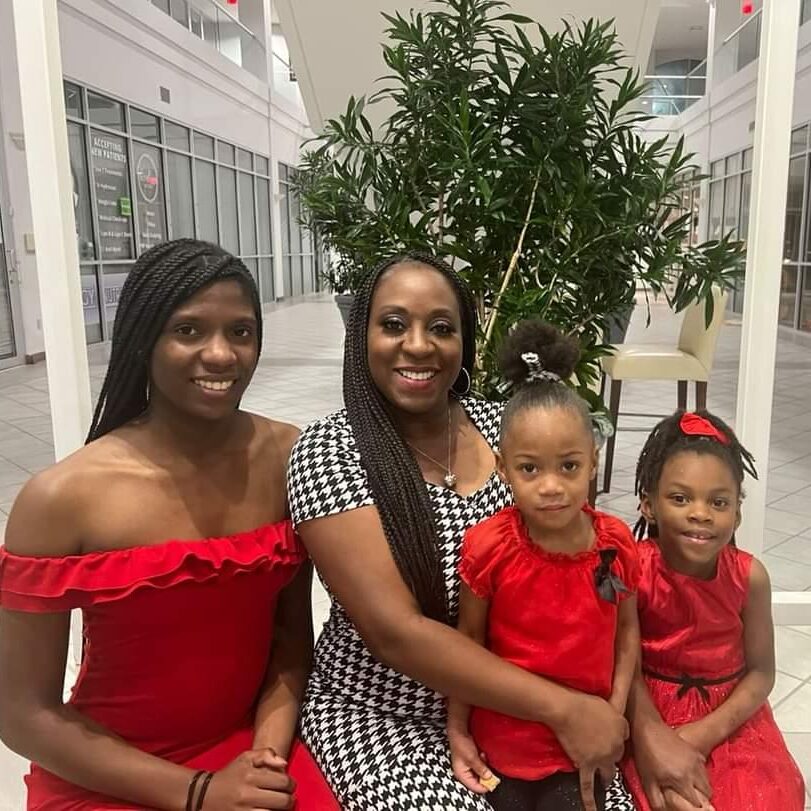
Tamyka thought the worst was behind her when she left the Army in 2010. Years later, a seizure behind the wheel sent her car into a highway median, cost her a job and forced her to ask for help she had long avoided.
“I’m grateful I reached out,” she said. “I needed to support my family, and I couldn’t do it alone.”
From Combat Medic to Civilian Life
Tamyka served from 2003 to 2010 as a sergeant combat medic, including a deployment to Iraq. The work demanded split-second decisions and steady hands. Back home, a different battle began. The corporate world felt murky compared with the clear rules she knew in uniform. Even her direct eye contact and clipped phrases — “Roger that,” “outside the wire” — landed wrong.
“A supervisor had to teach me to look away every six seconds,” she said. “I didn’t realize my communication style intimidated people.”
Life Unraveled Again
Life stabilized, then unraveled again. During the pandemic, staying inside muted her triggers. Returning to offices and crowded roads brought stress and overstimulation. Seizures began in 2021. Her sister pushed her to seek care through the VA and quietly stepped in as a caregiver.
In 2022, Tamyka blacked out while driving to work. An ambulance crew saw her car drift and got her to a hospital, where she had several more seizures. She broke a foot and lost her job. Her sister died in early 2023, taking with her much of the medical history she had managed.
“We were starting over,” Tamyka said.
Finding Support Through Volunteers of America
She turned to Volunteers of America in 2023 and again in 2025 when she hit another slump. Staff with the Homeless Veterans Reintegration Program met immediate needs — gas cards, interview clothing, pantry boxes and holiday gifts for her children. They covered months of child care and paid a phone bill and car insurance, support that helped her take interviews and accept work.
“They didn’t just see a veteran,” she said. “They saw a person.”
A Black Woman in Uniform
As a Black woman in uniform, Tamyka said she learned to prove herself early and often. At 5-foot-4, she trained to lift and carry men twice her size and earned trust under pressure.
“You have to believe I’ve got your back,” she told soldiers who doubted her until emergencies forced the question.
The memories are layered — friends lost overseas, the Fort Hood shooting that shook her unit after they returned, near misses that haunt quiet moments. Like many medics, she sent patients to helicopters not knowing if they survived. Survivor’s guilt settled in.
“I talk about the blood on my hands,” she said. “My mom reminds me there is a lot of blood I kept from being shed.”
Faith, Resilience and a Return to Purpose
The transition home brought other tensions. She wrestled with alcohol until she recognized it as a symptom, not a cause. She carried resentment toward peers who ignored safety and got hurt, even as she treated them. She also carried a creed she still repeats: “Love thy neighbor as thyself.”
That ethic helped her reengage with community. Through VOA, she networked with other veterans — some reluctant to identify as such — and started using benefits she once refused. The HVRP team made the process “seamless,” she said, and gave her space to be honest about grief, anxiety and pride.
A New Mission
Today, Tamyka works from home as a claims processor for a contractor helping reduce the VA’s backlog. The job returns structure and purpose — the things she sought when she first left the service.
“Money matters — I need a job,” she said. “But they also fed my spirit. The people at Volunteers of America lived the mental health part by how they treated me.”
Tamyka’s story is not tidy. Seizures don’t keep a calendar. Grief arrives unannounced. But she has rebuilt a support system and a mission: care for her family, serve other veterans and keep choosing compassion, even when it costs something.
“They came when I lost my North Star,” she said. “I can’t say enough about them.”